Showing posts with label Android. Show all posts

Friday, November 06, 2015

Auto-rooting malware for Android

No comments:
Three new malware strains infect 20k apps, impossible to wipe, only affect Android
By Daniel Eran Dilger
Thursday, November 05, 2015, 02:40 pm PT (05:40 pm ET)

A new adware scourge injecting itself into popular apps such as Facebook and Twitter is also "virtually impossible to uninstall," requiring infected users to replace their phones. Because it only affects users of Google's open-store Android app model, the device replacement requirement may accelerate the trend of users switching to iOS.

"A new trend for adware and an alarming one at that"

Three new families of "auto-rooting adware," detailed by security researchers at Lookout, are "a worrying development in the Android ecosystem" because each can root the device and install itself as a system application, making the contamination virtually impossible to remove as the infection is designed to survive even a "factory data reset" device wipe.

The group found infections among more than 20,000 popular apps, with many contaminated apps appearing to be legitimate, working titles ranging from Candy Crush to Facebook to Snapchat, WhatsApp, The New York Times and even Google Now.

I could use this article as the basis for a gratuitous swipe at Android and laugh at people who protest Apple's rules that force all installations to go through their App Store, but that would just be rude.

Sunday, August 23, 2015

Google’s iron grip on Android: Controlling open source by any means necessary

No comments:
Google’s iron grip on Android: Controlling open source by any means necessary
Android is open—except for all the good parts.

Google has always given itself some protection against alternative versions of Android. What many people think of as "Android" actually falls into two categories: the open parts from the Android Open Source Project (AOSP), which are the foundation of Android, and the closed source parts, which are all the Google-branded apps. While Google will never go the entire way and completely close Android, the company seems to be doing everything it can to give itself leverage over the existing open source project. And the company's main method here is to bring more and more apps under the closed source "Google" umbrella.

Every so often, I read articles or blog comments about how Android is superior to iOS because Google is "open" and Apple is "closed" and how Apple's "walled garden" is evil, but Google is good because Android is open source.

Not really. As this Ars Technica article from 2013 points out, it's not really true. While the core OS is open source, all of the stuff customers care about are not part of the OS - they're part of closed-source apps that can only be downloaded via the Google Play store. And any manufacturer that uses a custom fork of Android, for any reason, is summarily declared "incompatible" and is banned from the Play Store - meaning their customers will have no access to the apps and features that Android customers worldwide are demanding.

Is this pseudo-openness really any better than Apple's ecosystem, where Apple controls everything and there is no attempt to hide this fact?

Wednesday, January 15, 2014

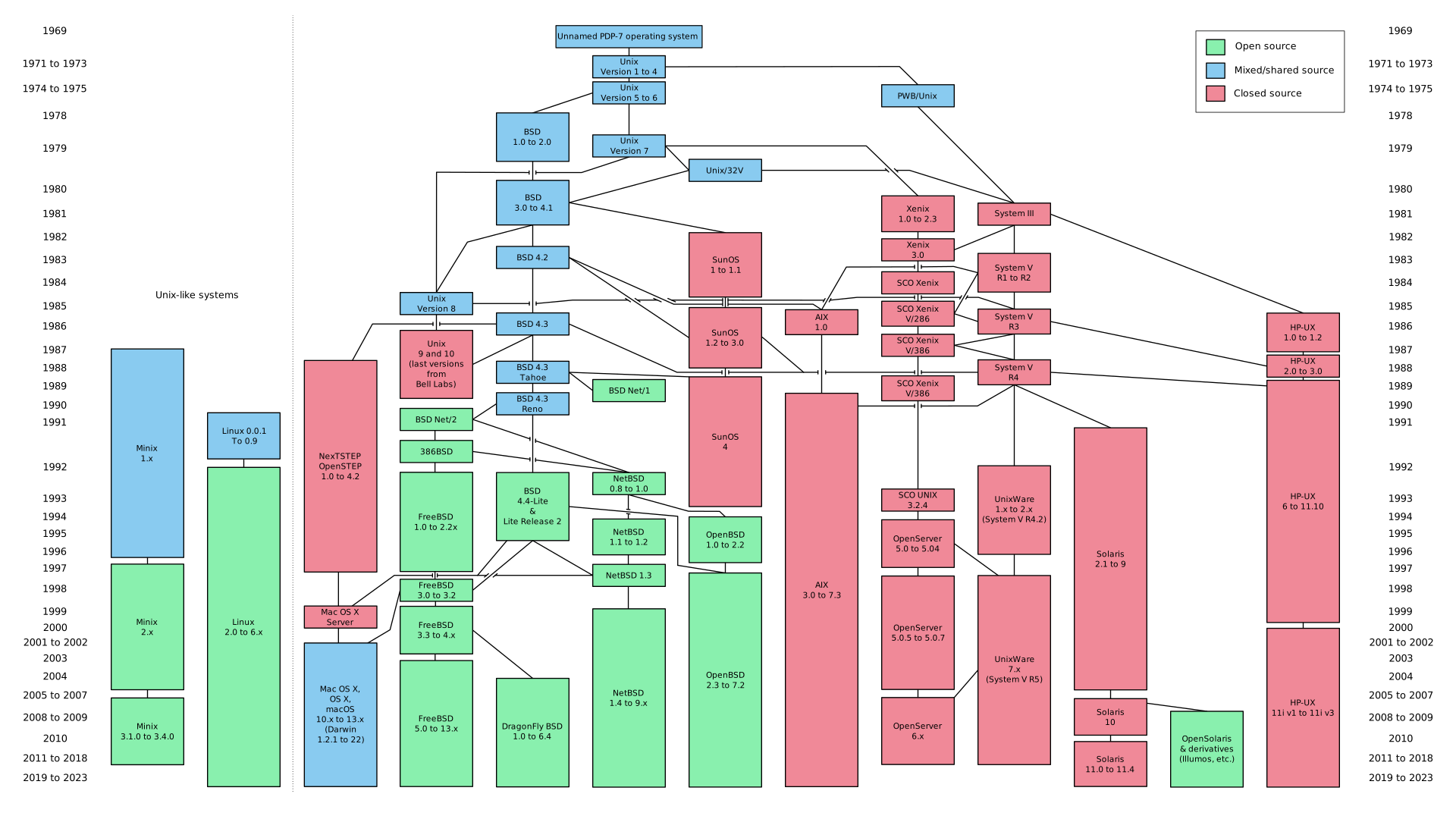
UNIX as religion?

No comments:
Or, as the article's author calls it, Over-Extended Metaphor for the day.

It's an amusing (if somewhat tenuous) way of drawing an analogy between the world/politics of UNIX-like operating systems and Christianity.

...
In the early days, the UNIX faith spread underground among nests of true believers; but they evangelized their friends and neighbours and gradually it began to spread in strange communities. And with the spread came the great split. By the mid-1970s there were two main sects: AT&T UNIX, which we may liken unto the Roman Catholic Church, and BSD UNIX, which we may approximate to the Orthodox Churches. And then lo, there were many schisms.
...
Read on...

Saturday, July 27, 2013

Slate: Android vs. iPhone: Why Apple still has the edge over Google';s operating system

No comments:
Farhad Manjoo, writing for Slate, points out that although Google has developed a great operating system in Android, it usually gets mangled into a steaming pile of trash by cell phone manufacturers and phone companies before you ever get to see it.

... Over the last few months, though, I’ve been testing two of the most expensive, most advanced Android phones on the market, the Samsung Galaxy S4 and the HTC One. Actually, I’ve been doing more than that. I’ve been using two versions of each of these phones—the standard phone that you get for $199 when you sign a two-year cellular contract, and a second “Google Play edition,” which is a special, full-priced version that features only the essential software you need on a smartphone. (The Play edition HTC one is $599, and the S4 is $649.) I’ve been switching between these four devices, using one or the other as my primary phone at all times.

...

This is one of the most important advantages Apple has over Android devices. When you buy an iPhone, it works exactly as Apple intended; it’s never adulterated by “features” that the company didn’t approve. But when you buy an Android phone, even a really great one, you’re not getting the device that Google’s designers had in mind when they created the OS. You’re not even getting the device that the phone manufacturer—Samsung and HTC, in this case—had in mind. Instead you’re getting a bastardized version, a phone replete with software that has been altered by many players along the way, usually in a clumsy, money-grubbing fashion.

...

There are lots of annoying nuisances like this one, in which Samsung or HTC took Google’s easy-to-use design and monkeyed with it for no good reason. Together, all these little bugs add up to a frustrating experience. In most cases, you can fix the problem; you can replace Samsung or HTC’s apps with Google’s version, you can remove the unnecessary stuff from your home screen, you can opt-out of flashy but terrible gimmicky features (like the totally useless “eye tracking” system in the Galaxy S4). But doing so is too much of a hassle for people who just want a phone that works right out of the box. If that’s what you want, you’ve got two choices. You can pay full price for a Play edition Android device (I’d choose the HTC One over the Galaxy S4, because it’s much more attractive, physically). Or you can buy an iPhone.

Read the complete article here.