Showing posts with label technology. Show all posts

Saturday, April 18, 2026

NY Post: Firefighters show off amazing new way to extinguish flames — by blasting them with sound, not water

No comments:
Firefighters show off amazing new way to extinguish flames — by blasting them with sound, not water
By Jeanne Erickson. Published April 18, 2026, 12:14 p.m. ET

The sound you can’t hear might just save your house.

It sounds like something out of a sci-fi blockbuster, but firefighters in California are firing up a fascinating new way to fight flames — with sound waves.

The San Bernardino County Fire Department recently showed off a futuristic system that detects and extinguishes flames without water or chemicals.

Instead, it uses powerful — but completely silent — sound vibrations to snuff out the fire itself.

Way cool tech. Hopefully coming soon to buildings everywhere.

Saturday, April 20, 2024

Etak: The first automotive navitation system

No comments:
12 Map Happenings that Rocked our World: Part 9: A Curious Phenomenon Called ‘Etak’
James Killick, April 11, 2024

Every once in a while, a revolutionary product comes along that changes everything. Or so said Steve Jobs when he announced iPhone in 2007.

But I’m talking about a different revolutionary product. A foundational product that forever changed how everyone on this planet gets to where they need to be.

Today, I’d like to tell you about the Etak Navigator, a truly revolutionary product and the world’s first practical vehicle navigation system.

The Etak system encapsulated most of what modern navigation systems use today, and it did it with 1980's technology.

h/t Daring Fireball

Monday, February 03, 2020

IEEE Spectrum: To Make Solid Electrolytes, Start With a Liquid

No comments:
To Make Solid Electrolytes, Start With a Liquid
03 Feb 2020 | 20:05 GMT. By Sandy Ong

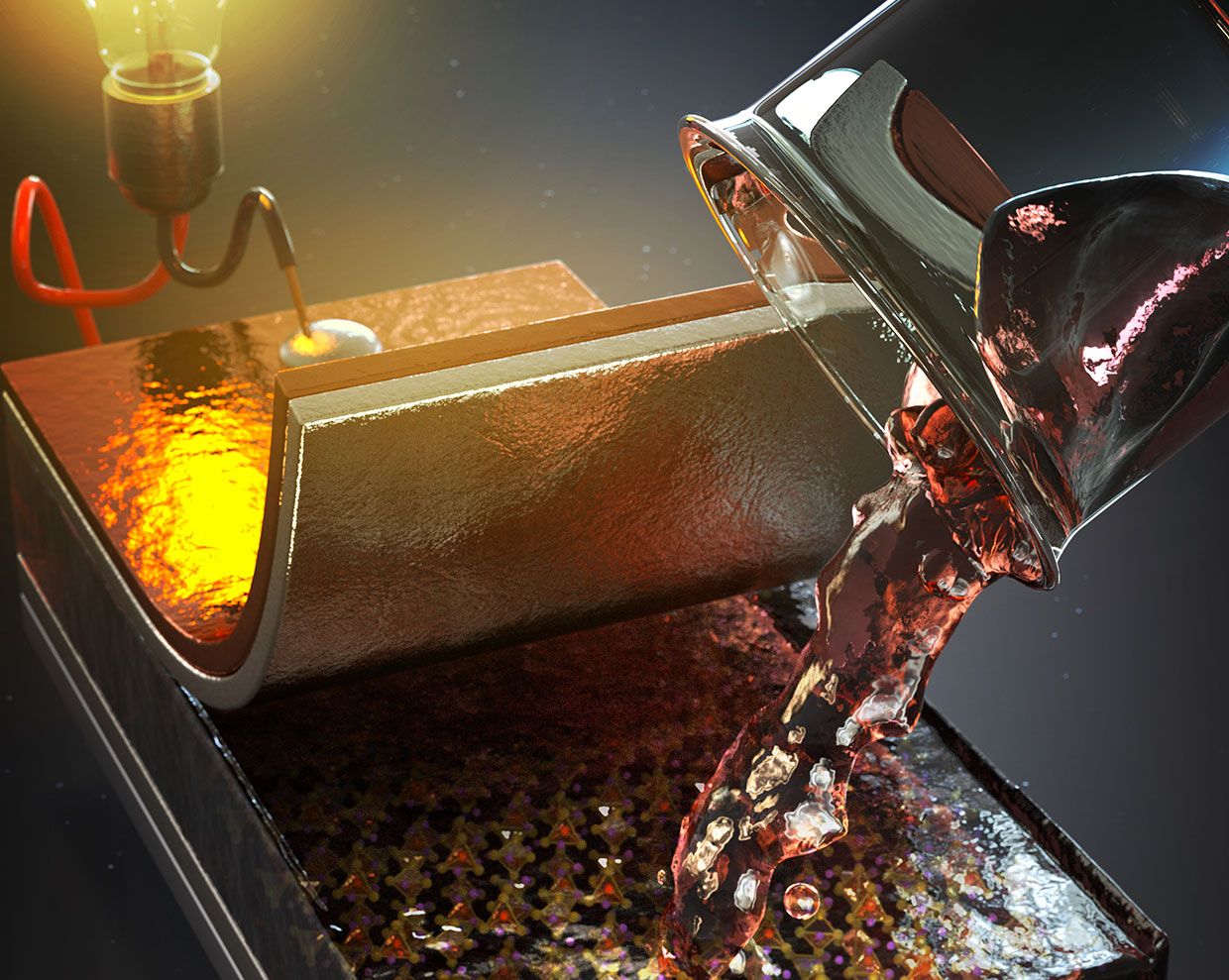
A solutions-based synthesis can make thin yet strong electrolytes for solid-state batteries

New batteries are often described with comparatives: they’re safer, lighter, or longer-lived than today’s versions. Solid-state batteries—those which contain no liquid—can make two such claims. With inorganic electrolytes, they’re much less likely to catch fire than traditional lithium-ion batteries, which have organic electrolytes. And by swapping out graphite for lithium as the anode, you can get a massive increase (up to 10-fold) in energy density, making solid-state batteries look especially promising for electric vehicles.
...
While Liu’s project officially ended on 31 January, the team is now in talks with a different federal funding agency and an industry player to continue their work. The goal is to create a working prototype for a solid-state battery with a two ampere hour (Ah) capacity—similar to the capacity of most smartphone batteries today—at a target cost of below US $100 per kilowatt hour (kWh) within the next two to three years.

Cool new tech. Maybe we'll see these in our phones, tablets and laptop computers in a few years.

Thursday, January 18, 2018

GM to offer fully autonomous ride-sharing in 2019

No comments:
No pedal to the metal in GM's planned self-driving Cruise AV car
Nick Carey, Paul Lienert, Reuters, January 12, 2018 / 1:07 PM

DETROIT (Reuters) - General Motors Co (GM.N) is seeking U.S. government approval for a fully autonomous car - one without a steering wheel, brake pedal or accelerator pedal - to enter the automaker’s first commercial ride-sharing fleet in 2019, executives said.
...
GM is part of a growing throng of vehicle manufacturers, technology companies and tech startups seeking to develop so-called robo-taxis over the next three years in North America, Europe and Asia. Most of those companies have one or more partners.
...
GM wants to control its own self-driving fleet partly because of the tremendous revenue potential it sees in selling related services, from e-commerce to infotainment, to consumers riding in those vehicles.

At a Nov. 30 briefing in San Francisco, GM’s Ammann told investors the lifetime revenue generation of one of its self-driving cars could eventually be “several hundred thousands of dollars.” That compares with the $30,000 on average that GM collects today for one of its vehicles, mostly derived from the initial sale.

GM’s Cruise AV is equipped with the automaker’s fourth-generation self-driving software and hardware, including 21 radars, 16 cameras and five lidars - sensing devices that use laser light to help autonomous cars “see” nearby objects and obstacles.

This is amazing. Two years from now, we will be seeing true driverless cars on the road, at least in some cities in the US. It may be a while before the tech matures enough to let us have this capability for ourselves - to own one and use it everywhere we currently drive, but this is still an incredible next step.

Friday, May 22, 2015

The Verge: Building blocks: how Project Ara is reinventing the smartphone

No comments:
Building blocks: how Project Ara is reinventing the smartphone

Project Ara is not, technically, a phone. It's not even that accurate to call it a project. It's more like a mission. The end goal for ATAP is to hand off a viable product and stewardship of a hardware ecosystem to Google — Eremenko and his small team aren't just building a series of proof-of-concept prototypes; they're attempting to build an industry within an industry.

For those who haven't heard of this before, Project Ara is an R&D project for a modular cell phone.

What this means is that instead of getting one large "brick" with all the features, you get an "endoskeleton" frame into which you can attach various modules. For example, a screen (clearly necessary to have one of these), battery, camera, speaker, microphone, processor, memory, NFC transceiver, cellular transceiver, Wi-Fi, etc.

Thursday, November 21, 2013

BioLite Camp Stove

No comments:
Every now and then, I run across a really nifty product. The BioLite Camp Stove is a small camping stove that you can carry in a backpack. It burns twigs and other small pieces of wood - what you are likely to find lying around a camp site, and does not use propane or other expensive fuels.

What makes this different from other kinds of camp stoves is that it has a "power module" that uses heat from the fire to generate electricity to power a fan. This fan blows air into the fire, making it burn hotter and more efficiently than it would otherwise. And as an added bonus, since it generates more power than it needs, it also has a USB port that you can use to charge small electronic devices when the fire is burning.

Interestingly, they also make a large model. Their Home Stove is targeted at people who routinely cook over open fires (like in many third-world countries.) Using a similar design to the Camp Stove, the Home Stove consumes less wood, emits less smoke and gives off less carbon monoxide than an open fire. And it also has a USB port to power small devices.

I realize that I'm not the target audience for these products, as a person who lives in a house with a modern kitchen and never goes camping, but I can appreciate great tech when I see it, and this is pretty awesome.

Saturday, July 27, 2013

Slate: Android vs. iPhone: Why Apple still has the edge over Google';s operating system

No comments:
Farhad Manjoo, writing for Slate, points out that although Google has developed a great operating system in Android, it usually gets mangled into a steaming pile of trash by cell phone manufacturers and phone companies before you ever get to see it.

... Over the last few months, though, I’ve been testing two of the most expensive, most advanced Android phones on the market, the Samsung Galaxy S4 and the HTC One. Actually, I’ve been doing more than that. I’ve been using two versions of each of these phones—the standard phone that you get for $199 when you sign a two-year cellular contract, and a second “Google Play edition,” which is a special, full-priced version that features only the essential software you need on a smartphone. (The Play edition HTC one is $599, and the S4 is $649.) I’ve been switching between these four devices, using one or the other as my primary phone at all times.

...

This is one of the most important advantages Apple has over Android devices. When you buy an iPhone, it works exactly as Apple intended; it’s never adulterated by “features” that the company didn’t approve. But when you buy an Android phone, even a really great one, you’re not getting the device that Google’s designers had in mind when they created the OS. You’re not even getting the device that the phone manufacturer—Samsung and HTC, in this case—had in mind. Instead you’re getting a bastardized version, a phone replete with software that has been altered by many players along the way, usually in a clumsy, money-grubbing fashion.

...

There are lots of annoying nuisances like this one, in which Samsung or HTC took Google’s easy-to-use design and monkeyed with it for no good reason. Together, all these little bugs add up to a frustrating experience. In most cases, you can fix the problem; you can replace Samsung or HTC’s apps with Google’s version, you can remove the unnecessary stuff from your home screen, you can opt-out of flashy but terrible gimmicky features (like the totally useless “eye tracking” system in the Galaxy S4). But doing so is too much of a hassle for people who just want a phone that works right out of the box. If that’s what you want, you’ve got two choices. You can pay full price for a Play edition Android device (I’d choose the HTC One over the Galaxy S4, because it’s much more attractive, physically). Or you can buy an iPhone.

Read the complete article here.

Friday, April 12, 2013

Ultra Small Form Factor (USFF) PCs's

No comments:
I just saw one of these for sale. PC's have just gotten a whole lot smaller.

This puppy is a mere 4x4x2". Packed within is an Intel Core i3-3217U processor (1.8GHz, 2 cores, hyperthreaded), 2 SO-DIMM sockets supporting up to 16GB of RAM, 2 HDMI ports for video, 3 USB 2.0 ports (plus 2 internal ones), Gigabit Ethernet, Mobile SATA port for an SSD, optional Wi-Fi and Blue Tooth.

Amazon's price (stripped) is about $300. Add 16GB of RAM (for $120) and a 256GB mSATA SSD (for $206), and you've got a really nice pocket-size computing platform for about $625 - which is cheaper than many systems of similar power that are physically much larger.

Thursday, March 14, 2013

Boston drivers to their cars: Shut up and drive

No comments:
Boston drivers to their cars: Shut up and drive - - Boston.com

Yep. Interactive things like GPS is very nice when it works, but when it doesn't it's worse than nothing.

Various GPS apps for iOS and Android have all made me so angry that I no longer use any of them, and I'm looking forwarding to ditching my smartphone altogether, when I get up to the next renewal point in my contract.

I'm so fed up with half-assed technology that I just want to be rid of all of it. Let me go back to the way I was living in the 80's, where equipment was dumb, but usually worked and was easy to fix the rest of the time. Today, manufacturers ship stuff without testing, and when you complain, they treat you as if you are the problem. And then they expect you to pay big bucks for the next version, which will be even more broken than before.

I like my electronic toys, but I no longer want to have to rely on any of them in my life. They're just too unreliable to be used as anything other than toys.

Wednesday, March 13, 2013

The Google Glass feature no one is talking about — Creative Good

No comments:
The Google Glass feature no one is talking about — Creative Good

Google Glass might change your life, but not in the way you think.

... lifebits, the ability to record video of the people, places, and events around you, at all times. ...

The key experiential question of Google Glass isn’t what it’s like to wear them, it’s what it’s like to be around someone else who’s wearing them. ... you don’t know if they’re taking a video of you.

Now pretend you don’t know a single person who wears Google Glass… and take a walk outside. Anywhere you go in public – any store, any sidewalk, any bus or subway – you’re liable to be recorded: audio and video. Fifty people on the bus might be Glassless, but if a single person wearing Glass gets on, you – and all 49 other passengers – could be recorded. Not just for a temporary throwaway video buffer, like a security camera, but recorded, stored permanently, and shared to the world. ...

... the video all streams into Google’s own cloud of servers. Now add in facial recognition and the identity database that Google is building within Google Plus ... Finally, consider the speech-to-text software that Google already employs, both in its servers and on the Glass devices themselves. Any audio in a video could, technically speaking, be converted to text, tagged to the individual who spoke it, and made fully searchable within Google’s search index. ...

Let’s return to the bus ride. It’s not a stretch to imagine that you could immediately be identified by that Google Glass user who gets on the bus and turns the camera toward you. Anything you say within earshot could be recorded, associated with the text, and tagged to your online identity. And stored in Google’s search index. Permanently.

Read the whole article for all the rest. Suffice it to say that Glass has the potential to completely eliminate any concept of privacy. And all done without any government intervention, and as a result of individuals voluntarily paying lots of money for the privilege.

Maybe it won't happen, but I would never bet against people being catastrophically stupid simply because someone says it's "cool".

Mind you, I happen to like the idea of being able to record everything you see and hear, so you can later cut/paste excerpts to keep for posterity. It means you won't miss a moment simply because it took too long to get your camera. But for me, I want those videos to stay in my possession. I want to be the one who decides what gets shared with the world and I certainly don't want some faceless corporation storing and cross-referencing my entire life for everybody else in the world to go picking through.

Tuesday, March 12, 2013

Messages From the Future: The Fate of Google Glass

No comments:
Messages From the Future: The Fate of Google Glass

Ow. What a painful analysis. But it's probably going to be correct. Assuming anybody actually buys Google Glass in the first place, of course.

Monday, February 01, 2010

What if Flash became an open standard?

No comments:
John Gruber's excelent Daring Fireball blog has an article entitled What if Flash Were an Open Standard?. In it, he cites a Dave Winer article, which (among other things) proposes that Adobe open up Flash for all to support and implement

Gruber rejects that possibility, writing:

That’d be an interesting move, and it would certainly shake things up. But what if the source code to Flash Player is — as many would wager — a huge steaming pile of convoluted C++ horseshit? It’s sort of like what if Microsoft open-sourced the Internet Explorer rendering engine. It’s not like anyone who is now using WebKit or Gecko would switch to that just because it was opened — or that WebKit, Mozilla, and Opera would suddenly be obligated to or even interested in adopting IE-specific web features.

I think this makes a strong point, but it should be noted that this wouldn't be the first time. When Netscape decided to release their code into open source, forming the Mozilla project, that code was also a tangled mess and very difficult to maintain. But there was a hard-core team of developers dedicated to improving it, and they did just that. They ripped out and replaced most of Netscape's own rendering code, creating the Gecko engine instead. They replaced the UI code with the Chrome/XUL system that allows almost infinite flexibility with the UI skins, etc.

I think that for something as popular as Flash, the open source community would make a similar effort to improve Adobe's code, eventually producing something with more features, more utility, more speed, and better maintainability.

As for Apple, it could choose to be a part of such development, or it could choose to strike out on its own, using the specs of the SWF format. Apple could develop its own SWF player in the way it feels is best, either releasing the code to open source or keeping the source closed.

In theory, Apple could do this today, since Adobe already publishes the SWF file format spec, but to do this now would be a losing proposition for Apple. Today, Adobe doesn't release these specs until after they ship new versions of Flash, so Apple would forever be playing catch-up. And Adobe is not going to document their bugs - places where they violate their own standard and may or may not ever get around to fixing the code.

But if flash becomes an open standard, then the spec doesn't get modified behind Adobe's closed doors. Instead, there are working groups and mailing lists. Apple (and anyone else who is interested) can join the working group and stay informed about new features. Apple can ship new features in its SWF player at the same time Adobe and everybody else ships players with those features.

I think this can be a win-win scenario for everybody involved. Even Adobe - they might lose their Flash monopoly, but with Flash becoming almost entirely marginalized in the mobile device market, that monopoly is probably going to lose its value pretty soon anyway. Better to take a leadership role in the new market than to sink into oblivion with the old market.

Thursday, October 22, 2009

Finding Common Ground on an Open Internet - a joint statement from Lowell McAdam, CEO Verizon Wireless and Eric Schmidt, CEO Google

No comments:
This message was posted to a popular internet tech blog and appears to be genuine. You might also find it of interest.

From: David Farber
Date: October 22, 2009 7:27:48 AM EDT
To: "ip"
Subject: [IP] Finding Common Ground on an Open Internet - a joint statement from Lowell McAdam, CEO Verizon Wireless and Eric Schmidt, CEO Google.

A Technology and Telecommunications Policy Blog
Thursday, October 22, 2009

Finding Common Ground on an Open Internet

The following is a joint statement from Lowell McAdam, CEO Verizon Wireless and Eric Schmidt, CEO Google.

Verizon and Google might seem unlikely bedfellows in the current debate around network neutrality, or an open Internet. And while it's true we do disagree quite strongly about certain aspects of government policy in this area--such as whether mobile networks should even be part of the discussion--there are many issues on which we agree. For starters we both think it's essential that the Internet remains an unrestricted and open platform--where people can access any content (so long as it's legal), as well as the services and applications of their choice.

Thursday, June 11, 2009

Israeli dew collectors

1 comment:
Ganked from yourish.com. Also read the article it links to.

An Israeli tech company has developed a passive device that allows plants to collect dew and excess rainwater, while also cutting off sunlight to weeds. Farms using these (at a cost of about $1 per plant) can use 50% less water - a real boon when growing crops in the desert.

Thursday, November 08, 2007

... and this is why DRM is evil

No comments:
Major League Baseball switched suppliers for their videos. As a part of this, they shut down their DRM server, making all previously-purchased videos completely unplayable. That's right - if you spend hundreds of dollars on MLB videos, you can no longer play any of them, because the DRM server needed to authenticate your player no longer exists.

MLB will not be putting the server back, nor will they issue any refunds for the now-useless videos. They are, however, asking you to buy new videos using their new (and incompatible server.) And anybody who thinks they won't get screwed over a second time is just plain stupid.

Anti-DRM advocates (myself included) have pointed out that this is a distinct possibility whenever you buy DRM-protected content. Your rights to your purchases can't possibly outlive the supplier. And in the case of Major League Baseball, their outsourced IT department, it seems.

Monday, November 05, 2007

Wired's predictions for Apple

No comments:
Back in 1997, Wired Magazine ran the article "101 Ways to Save Apple", listing what their editors felt would be best for Apple, its shareholders and its customers. This past year, Wired points out that a few of the predictions almost exactly matched what Apple ended up doing, calling themselves "oddly prescient".

Well, five predictions out of 101 are hardly an indicator of prescience. With that in mind, let's investigate the rest of them. For those who don't want to read my 101 comments (this will be a long post), here's my summary of the 101 predictions:

Correct: 24
Incorrect: 38
Debatable: 25
Inconsequential: 10
I don't know: 2

Note: Correct/Incorrect simply refers to whether Apple actually followed the recommendation. It has nothing to do with how good or bad the suggestion might be. Also note that many of the "incorrect" recommendations are ones that were obviously intended as jokes.

Thursday, November 01, 2007

British army tests invisible tank

No comments:
According to the above article, the British military have an experimental tank that can become invisible.

Well, not really invisible, but close to it. It has cameras to capture images of the surrounding landscape, which are then projected onto the tank's surface. When you look at the tank, you see what's on the other side.

Of course, it's far from real invisibility. You have to be standing right where the system thinks you should be standing in order for the tank to be completely invisible. But it should, nevertheless, act as very good camouflage, especially when the background is relatively uniform.

Of related interest:

Monday, October 29, 2007

Ars Technica reviews Mac OS X 10.5 Leopard

No comments:
This is a fairly long article, but it's a good read. Unlike most other reviews I've read so far, this one contains a lot of technical description and analysis. It's also not a "fanboy" article - it criticizes the product almost as much as it praises it.

Of particular interest to me is the fact that Mac OS 10.5 has a lot of interesting new technology on the inside. Unlike what I often see in software, this is not just a cosmetic skin over the same old system. Apple appears to have done some solid (and original) computer science research as a part of developing this release.

Assuming reality lives up to first impressions (which I'll know in a few weeks, I'm sure), I'm going to have to get myself a copy. If there are critical bugs (all new products have bugs, but they may not be critical to me), then I'll wait for one or two service packs first.

Monday, September 10, 2007

Discrete Track Recording hard drives

No comments:
Apple's newest iPods use a 1.8" hard drive with a capacity of 80GB per platter. This results in two different capacities - a single-platter 80GB drive and a slightly-thicker 2-platter 160GB drive.

Not content with that, Toshiba has invented a new hard drive technology, known as Discrete Track Recording (DTR). DTR promises to increase capacity by 50% (when combined with existing perpendicular recording technologies). They have already announced a 1.8" drive with 120GB per platter (and therefore 240GB on a 2-platter drive.) They expect to ship these drives in 2009. Expect Apple to ship iPods with this a week later.

They have not yet announced drives with this technology in other form factors, but we can probably expect to find 50% storage increases across the board - meaning 2.5" laptop drives at 480GB. (They did say that the process "is most easily applied to small form factor HDDs", so we may not find 3.5" drives using this until the process matures, but when it does, it would not be unreasonable to expect a 1.5TB drive.)