
Thursday, June 04, 2026
The Unsolved Mystery of Lorem Ipsum


Saturday, April 20, 2024
Etak: The first automotive navitation system
 12 Map Happenings that Rocked our World: Part 9: A Curious Phenomenon Called ‘Etak’
James Killick, April 11, 2024
Every once in a while, a revolutionary product comes along that changes everything. Or so said Steve Jobs when he announced iPhone in 2007.
But I’m talking about a different revolutionary product. A foundational product that forever changed how everyone on this planet gets to where they need to be.
Today, I’d like to tell you about the Etak Navigator, a truly revolutionary product and the world’s first practical vehicle navigation system.
The Etak system encapsulated most of what modern navigation systems use today, and it did it with 1980's technology.
h/t Daring Fireball
Monday, August 22, 2022
How macOS tracks file metadata on non-Mac storage
In this thread, one reader asked how Macintosh file metadata (e.g. a file's type and creator codes) are preserved when a file is copied to non-Macintosh storage (e.g. a Windows file server or a FAT formatted hard drive). He observed that he can copy a file to a Windows server, then copy/move the file to several different locations from Windows, and then copy the file back to a Mac and the metadata is preserved.
Here is the result of my analysis.
Tuesday, December 04, 2018
The story of the Commodore Amiga (updated: now through part 12, the final installment)
Here are links to what's been written so far:
- Part 1: Genesis
- Part 2: The birth of Amiga
- Part 3: First prototype
- Part 4: Enter Commodore
- Part 5: Postlaunch Blues
- Part 6: Stopping The Bleeding
- Part 7: Game On!
- Part 8: The Demo Scene
- Part 9: The Video Toaster
- Part 10: The downfall of Commodore
- Part 11: Between an Escom and a Gateway
- Part 12: Red vs. Blue
- People still use the Amiga today, and new Viva Amiga documentary shows why
- The A-EON Amiga X5000: An alternate universe where the Amiga platform never died
I believe this is the complete set of articles - 12 parts plus two sidebar articles. If more are written in the future, I will update this article when I learn about them.
Tuesday, August 07, 2018
New comic: Laws and Sausages
Greg Weiner and Zach Weinersmith (author of Saturday Morning Breakfast Cereal) have teamed up to present, in comic form, a series of lessons on American history, civics and how the US government works (or is supposed to work).
The lessons posted so far are:
- Separation of Powers, part 1
- Separation of Powers, part 2
- Impeachment
- Practical Info #1: Writing to Congress
Wednesday, May 02, 2018
Heraclitean River: No, February 29th is NOT "Bissextile Day"
February 28, 2016, by Heraclitus
A new use of an old obscure word has emerged in recent years. With leap day approaching, we will undoubtedly hear a number of sources wishing a “Happy Bissextile Day!” for February 29th.
The problem is that the term bissextile day does not refer to February 29th, and it never did. I assume some folks get this mistaken impression due to old dictionaries that state the definition of bissextile day as something like “the day added to leap years.” That definition is correct, but the problem is such definitions were written back when educated people would have understood that “the day added to leap years” was February 24th, not February 29th.
“Huh?” you say. “What do you mean, February 24th is added in leap years? That makes no sense.” Well, it doesn’t make sense in modern calendars, but that is in fact when the bissextile day happens in leap years. Thus, if you want to use that fancy word, don’t use it for the 29th. Let me explain.
I just discovered (thanks to a reader who pointed it out to me) that the Heraclitean River blog no longer exists. I don't know exactly when it went down, but it's currently occupied by a domain squatter. According to the Wayback Machine, the site seems to have been down in March 2018 (the last capture) and the last valid capture of the home page was in October 2017. So we can assume that it went down some time between those two dates.
I don't know why the site went away, but as a part of my discovering this, I read the last article posted and since it is very interesting, I'm sharing it with you. Please read the full article and share it with your friends - it's a fascinating read.
Thursday, December 28, 2017
MacRumors: Source Code for Apple's Lisa Operating System to be Released for Free in 2018
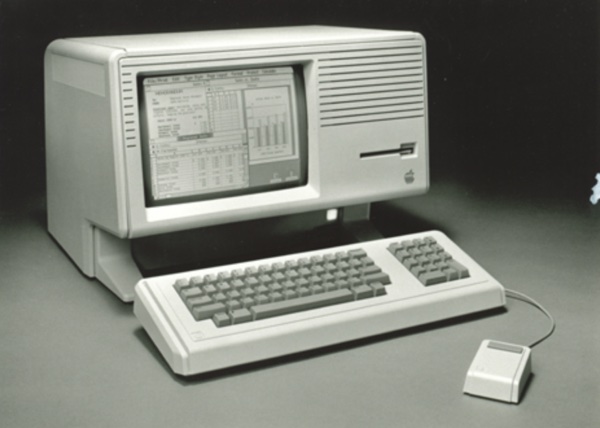 Source Code for Apple's Lisa Operating System to be Released for Free in 2018
Wednesday December 27, 2017 5:57 pm PST by Juli Clover
The Apple Lisa, released in 1983, was one of the first personal computers to come equipped with a graphical user interface, and soon the operating system that ran on the Lisa will available for free, courtesy of the Computer History Museum and Apple.
As noted by Gizmodo, Al Kossow, a software curator at the Computer History Museum, recently announced that both the source code for the Lisa operating system and the Lisa apps have been recovered. Apple is reviewing the source code, and once that's done, the museum will be releasing the code publicly.
This is really awesome news. Hopefully it will spur some people in the emulation community to make a Lisa emulator we can run on our modern computers under macOS, Windows and Linux. I, for one, would love to be able to try out this historic computer and compare the experience with what I remember from the early Macs, with the design ideas Jef Raskin developed, and other contemporary computer systems.
Friday, October 09, 2015
FastCompany: Why The Steve Jobs In Aaron Sorkin's Movie Could Never Have Saved Apple
 Why The Steve Jobs In Aaron Sorkin's Movie Could Never Have Saved Apple
The movie is full of fictions. Many are minor details. One character accuses Jobs of having "multiple billions of dollars" — but the movie ends in 1998, and Jobs didn’t actually get that kind of money until 2006, when Disney bought Pixar (a company that isn’t even mentioned in the movie). Other fictions are major, including several invented confrontations between Jobs and Apple cofounder Steve Wozniak, Mac genius Andy Hertzfeld, and ex-CEO John Sculley. And then there’s the grand fiction of omission in the final act, which hinges on an imagined reconciliation between Jobs and Lisa—the daughter whose paternity he once denied—before his 1998 introduction of the iMac. Moviegoers have no way of knowing that by 1998 the real Steve Jobs had been married for seven years, was raising three children with his wife, had brought Lisa under their roof, and had been profoundly changed by his family life in the slow-yet-sudden way that is so common to so many people.
Steve Jobs screenwriter Sorkin has claimed his right to tinker with history for the sake of art. In the past few weeks, he has asserted that his goal was never to create a biopic. "Walter [Isaacson]’s biography had to be about what happened," Sorkin told Wired. "It had to be a piece of journalism. When I write something, there is actually a requirement to be subjective; it’s really the difference between a photograph and a painting." He also told the Wall Street Journal, when asked about some of the movie’s most memorable lines of dialogue, "If any of them are real, it’s a remarkable coincidence." And Sorkin has repeatedly cited something the late Mike Nichols told him during the creation of Charlie Wilson’s War: "Art isn’t about what happened."
h/t Daring Fireball
I wasn't planning on seeing this movie, and after reading this review (please read the whole thing) I really don't want to.
Friday, September 25, 2015
Heraclitean River: Why two spaces after a period isn't wrong (or, the lies typographers tell about history)
The topic of spacing after a period (or “full stop” in some parts of the world) has received a lot of attention in recent years. The vitriol that the single-space camp has toward the double-spacers these days is quite amazing, and typographers have made up an entire fake history to justify their position.
The story usually goes something like this:
Once upon a time, typographical practice was anarchy. Printers put in all sizes of spaces in haphazard ways, including after periods. Then, a standard emerged: the single space after a period. Unfortunately, the evil typewriter came along, and for some unknown reason (usually blamed on monospace fonts), people began to put wider double spaces after periods. Typographers railed against the practice, but they could do nothing. Actual printed work used the single space, but the morons with their typewriters could not be stopped. Early computers and printers used similar monospace typefaces, and the evil persisted. Then, in the past couple decades, it became possible to use proportional fonts easily, and finally typographers could step in and save the day again with their single sentence spaces! The only people today who continue to use double spaces are stodgy old typing teachers and ignorant fools, who dare to think that their practice is okay in the face of the verdict of the experts in typography.
...
Unfortunately, this whole story is a fairy tale, made up by typographers to make themselves feel like they are correct in some absolute way. The account is riddled with historical fabrication. Here are some facts:
- There were earlier standards before the single-space standard, and they involved much wider spaces after sentences.
- Typewriter practice actually imitated the larger spaces of the time when typewriters first came to be used. They adopted the practice of proportional fonts into monospace fonts, rather than the other way around.
- Literally centuries of typesetters and printers believed that a wider space was necessary after a period, particularly in the English-speaking world. It was the standard since at least the time that William Caslon created the first English typeface in the early 1700s (and part of a tradition that went back further), and it was not seriously questioned among English or American typesetters until the 1920s or so.
- The “standard” of one space is maybe 60 years old at the most, with some publishers retaining wider spaces as a house style well into the 1950s and even a few in the 1960s.
- As for the “ugly” white space, the holes after the sentence were said to make it easier to parse sentences. Earlier printers had advice to deal with the situations where the holes became too numerous or looked bad.
- The primary reasons for the move to a single uniform space had little to do with a consensus among expert typographers concerning aesthetics. Instead, the move was driven by publishers who wanted cheaper publications, decreasing expertise in the typesetting profession, and new technology that made it difficult (and sometimes impossible) to conform to the earlier wide-spaced standards.
I can't begin to tell you how much this article is a breath of fresh air.
Do you think discussing religion or politics is a good way to make total strangers hate your guts and threaten violence against you and your family and everybody you brushed up against on the subway for the last six months? That's nothing compared to what will happen if you dare to discuss sentence spacing with typography nerds.
Or even worse, ask one what font should be used. Or even worse, dare to suggest that web pages should respect a user's personal font/size preferences (as configured in his web browser) and not force a style that may not be readable on the user's device. Does anyone really think that a single font will look equally good on a 1200dpi printout, a 300dpi Retina screen, a 72dpi CRT monitor, a Kindle, a mobile phone and a wristwatch? Typography nerds will insist that they know best and that you are an evil human being if you dare suggest that they can't possibly know what's best for every single device that might someday be used to display the text. I've actually been personally attacked and banned from an on-line forum (one having nothing to do with typography) for making this suggestion.
Read the rest of the article for a great history on the subject. And I love the fact that the author has deliberately formatted it using an extra-wide space between all the sentences! As a show of solidarity, I've done the same for this article.
Saturday, May 30, 2015
Apple History: More on the GUI
Several years ago, Bruce Horn, one of the original team of engineers that worked on the Macintosh, had this article published in Guy Kawasaki's Evangelist. Jef Raskin, who started development of the Macintosh before Steve Jobs took the project over, had this to say in response. Horn's rebuttal can be read here, and Raskin's second response can be read here.
For those interested in the history of the Macintosh and GUI design in general, the linked articles are incredibly interesting.
Thursday, February 12, 2015
Slate: History of the High Heel
 A Short History of the High Heel
As a fashion object and symbol, the high-heeled shoe is weighted with meaning. It’s also weighted with the wearer’s entire body weight. The stiletto might be one of the only designs that is physically painful but has somehow persisted for centuries.
High-heeled shoes were originally worn by men. As early as the 10th century, many horseback-riding cultures wore heels on their boots and on their shoes, because heels help you stay in the stirrups (which is why cowboy boots have heels).
A fascinating article. The only thing I'd add is that although high heels are no longer fashionable for men, men's dress shoes all have heels (typically about 1").
Wednesday, November 26, 2014
Word of the day: Dord
 Ghost Word
Claim: For five years, Webster's New International Dictionary mistakenly included an entry for dord, a word which did not exist.
Status: True.
h/t Dinosaur Comics.
Tuesday, December 03, 2013
Origin of the Christmas stocking
While there are no written records of the origin of the Christmas Stocking, there are popular legends that attempt to tell the history of this Christmas tradition. One such legend has several variations, but the following is a good example:
Very long ago, there lived a poor man and his three very beautiful daughters. He had no money to get his daughters married, and he was worried what would happen to them after his death. He thought they would become prostitiutes. Saint Nicholas was passing through when he heard the villagers talking about the girls. St. Nicholas wanted to help, but knew that the old man wouldn't accept charity. He decided to help in secret. After dark he threw three bags of gold through an open window, one landed in a stocking. When the girls and their father woke up the next morning they found the bags of gold and were, of course, overjoyed. The girls were able to get married and live happily ever after. Other versions of the story say that Saint Nicholas threw the 3 bags of gold directly into the stockings which were hung by the fireplace to dry.This led to the custom of children hanging stockings or putting out shoes, eagerly awaiting gifts from Saint Nicholas. Sometimes the story is told with gold balls instead of bags of gold. That is why three gold balls, sometimes represented as oranges, are one of the symbols for St. Nicholas. And so, St. Nicholas is a gift-giver. This is also the origin of 3 gold balls being used as a symbol for pawnbrokers.
An interesting story. And I would never have guessed that the pawnbroker symbol is related to Christmas in any way.
Wednesday, May 01, 2013
Happy 20th birthday, World Wide Web
Is this the first ever web page? If not, CERN would like to know
Eggheads recreate what could be the original website
By Brid-Aine Parnell • Get more from this author
Posted in Applications, 30th April 2013 11:24 GMTBoffinry nerve-centre CERN has attempted to recreate the very first website to mark 20 years since the official launch of the World Wide Web.
It is feared the first ever web page is lost to the sands of time as it was changed daily and any backups are few and far between. However the team has pulled up a snapshot of the very first website dating from November 1992, which the eggheads say "may be the earliest copy we can find". The CERN bods are still hunting around for earlier versions.
The team also wants to use the original web server machine names and IP addresses to dish out the archived site to the planet. The effort coincides with the anniversary of CERN's statement on 30 April 1993 that made the technology behind the web available to all on a royalty-free basis, clearing the way for the online addictions we all have today.
Sunday, March 17, 2013
Wikipedia: History of the Jews in Ireland
History of the Jews in Ireland
From Wikipedia, the free encyclopediaThe history of the Jews in Ireland extends back nearly a thousand years. Although the Jewish community has always been small in numbers (always less than 4,000 by religion since at least 1891), it is well established and has generally been well-accepted into Irish life. Jews in Ireland have historically enjoyed a relative tolerance that was largely absent elsewhere in Europe.