Showing posts with label science. Show all posts

Friday, August 21, 2020

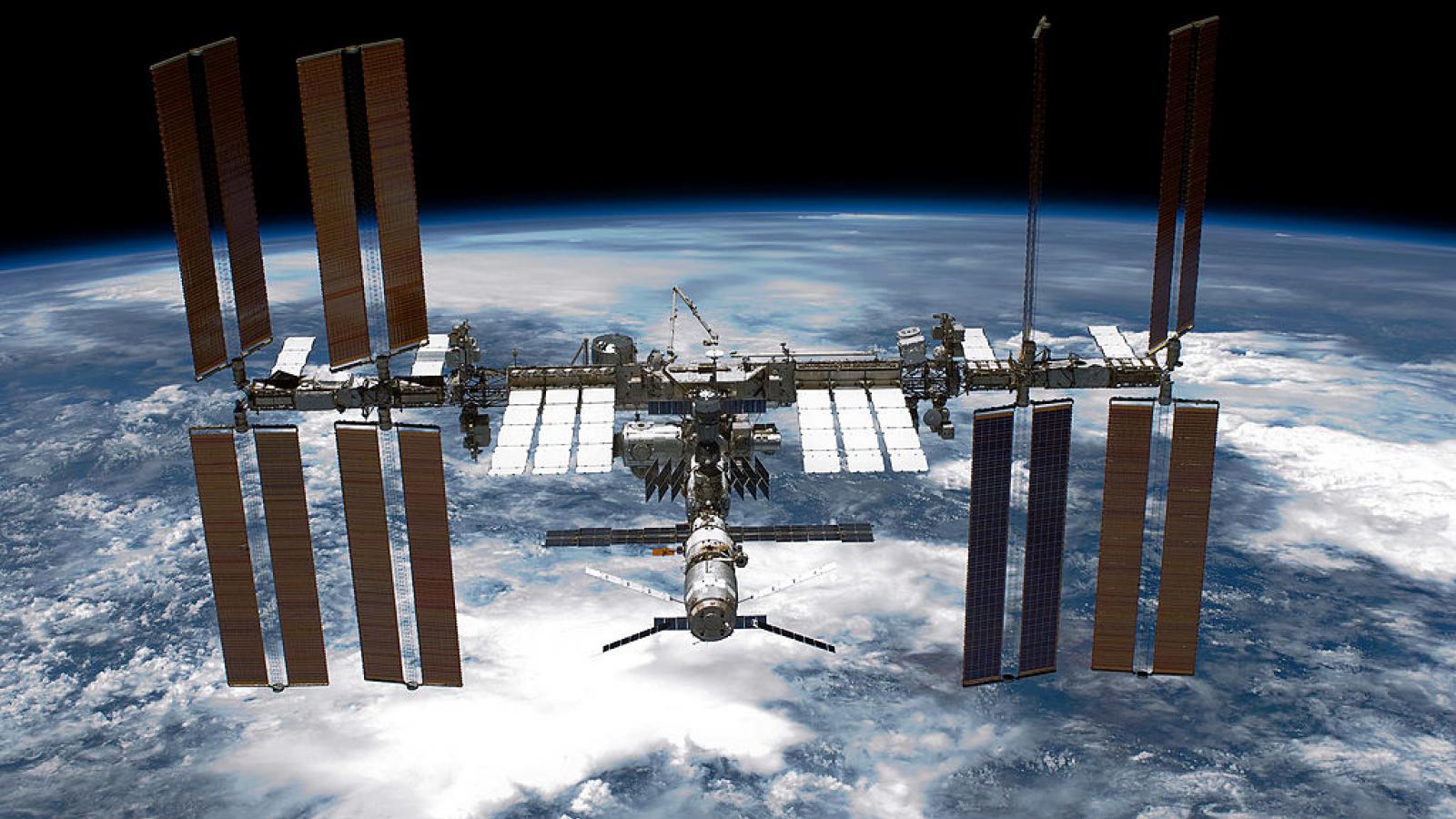
Just The News: Russian cosmonaut wonders if he saw UFO's while aboard International Space Station

No comments:
Russian cosmonaut wonders if he saw UFO's while aboard International Space Station
By Alex Nitzberg. Updated: August 20, 2020 - 6:37pm

Russian cosmonaut Ivan Vagner on Thursday posted a video from the International Space Showing showing a time-lapse of the aurora borealis, but he also highlighted the presence of other points of interest in the footage.

In the video, a row of what appears to be several small dots of light briefly appear and then vanish again.

Vagner asked people on Twitter what they thought it could be: "At 9-12 seconds, 5 objects appear flying alongside with the same distance. What do you think those are? Meteors, satellites or…?"

He definitely saw a UFO - whatever it was was flying and is (so far) unidentified. Probably not an alien spacecraft, but some kind of natural phenomenon, but definitely unidentified and flying.

Thursday, May 09, 2019

ECN Magazine: Radical Desalination Approach May Disrupt the Water Industry

No comments:
Radical Desalination Approach May Disrupt the Water Industry
Columbia University School of Engineering and Applied Science - Tue, 05/07/2019 - 1:50pm

Hypersaline brines—water that contains high concentrations of dissolved salts and whose saline levels are higher than ocean water—are a growing environmental concern around the world. Very challenging and costly to treat, they result from water produced during oil and gas production, inland desalination concentrate, landfill leachate (a major problem for municipal solid waste landfills), flue gas desulfurization wastewater from fossil-fuel power plants, and effluent from industrial processes.
...
A Columbia Engineering team led by Ngai Yin Yip, assistant professor of earth and environmental engineering, reports that they have developed a radically different desalination approach—"temperature swing solvent extraction (TSSE)"—for hypersaline brines. The study, published online in Environmental Science & Technology Letters, demonstrates that TSSE can desalinate very high-salinity brines, up to seven times the concentration of seawater. This is a good deal more than reverse osmosis, the gold-standard for , and can hold handle approximately twice seawater salt concentrations.

This is incredible news. Now that we have seen the process in a lab, hopefully it can be scaled up for use in a commercial desalinization plant. A cheap and low-energy technology would pretty much solve the world's fresh water supply problems.

Tuesday, February 07, 2017

Sean Carroll: Entropy and Complexity, Cause and Effect, Life and Time

No comments:
Entropy and Complexity, Cause and Effect, Life and Time
Posted on November 3, 2016 by Sean Carroll

... I had a very fun collaboration with Henry Reich, the wizard behind the Minute Physics videos. Henry and I have known each other for a while, and I previously joined forces with him to talk about dark energy and the arrow of time.

This time, we made a series of five videos (sponsored by Google and Audible.com) based on sections of The Big Picture. In particular, we focused on the thread connecting the arrow of time and entropy to such everyday notions of cause and effect and the appearance of complex structures, ending with the origin of life and how low-entropy energy from the Sun powers the biosphere here on Earth. Henry and I wrote the scripts together, based on the book; I read the narration, and of course he did the art.

Enjoy!

Please click through to the original article and watch the videos. Each one is about 3 minutes long and is easy to understand even without any scientific background.

Sunday, June 19, 2016

Entropic Time, by A Capella Science

No comments:
This is a really cool science song and an even more cool video. I don't want to think about how much work it must've been to make it (but I will soon find out, because they have a "making of" companion video, which I've embedded below the music video.)

And, the making-of video:

Wednesday, October 28, 2015

Scientific American: It's Time to End the War on Salt

No comments:
It's Time to End the War on Salt
The zealous drive by politicians to limit our salt intake has little basis in science
By Melinda Wenner Moyer - July 8, 2011

For decades, policy makers have tried and failed to get Americans to eat less salt. In April 2010 the Institute of Medicine urged the U.S. Food and Drug Administration to regulate the amount of salt that food manufacturers put into products; New York City Mayor Michael Bloomberg has already convinced 16 companies to do so voluntarily. But if the U.S. does conquer salt, what will we gain? Bland french fries, for sure. But a healthy nation? Not necessarily.

This week a meta-analysis of seven studies involving a total of 6,250 subjects in the American Journal of Hypertension found no strong evidence that cutting salt intake reduces the risk for heart attacks, strokes or death in people with normal or high blood pressure. In May European researchers publishing in the Journal of the American Medical Association reported that the less sodium that study subjects excreted in their urine—an excellent measure of prior consumption—the greater their risk was of dying from heart disease. These findings call into question the common wisdom that excess salt is bad for you, but the evidence linking salt to heart disease has always been tenuous.

I'm going to show this article to everybody who gets in my face about salt consumption.

Junk science combined with megalomaniacal politicians is not justification for controlling what people are allowed to eat, especially when the scientific evidence shows that it actually endangers health.

Friday, January 23, 2015

Instant Ice - Waterbending In Real Life!

2 comments:
Instant Ice - Waterbending In Real Life!

Want to make a glass of water freeze instantly on command? What is this supernatural power and who can use it? Discover the secrets to Ice-bending ... in real life.

Detailed Instant Ice Tips & Tricks: http://youtu.be/7o8moFSHrAQ

You can do it with soda too!: http://youtu.be/5T68TvdoSbI

http://www.thekingofrandom.com
...
Project Inspired by: A friend at work, named Lew, told me he left water bottles outside overnight in freezing temperatures, then got the water to freeze instantly by shaking them. Since then, I've seen multiple videos on YouTube demonstrating the effect of supercooled water, and had multiple requests to make a video.

Sounds like something fun to try at home. I'll have to try it out one of these days.

Wednesday, December 17, 2014

Corning: The Glass Age, parts 1 and 2

No comments:
Corning is presenting a web site entitled The Glass Age showcasing the science and technology of glass. There's a lot of interesting content here, although it somewhat resembles an advertisement as well, since Corning's products are (as expected) featured throughout the presentations.

Two fascinating video clips from this site feature Adam Savage and Jamie Hyneman presenting some modern applications of glass: optical fibers, flexible "willow" glass and super-strong "gorilla" glass.

Sunday, August 31, 2014

London Cyclist: What an RAF pilot can teach us about being safe on the road

No comments:
London Cyclist: What an RAF pilot can teach us about being safe on the road

"Sorry mate, I didn’t see you". Is a catchphrase used by drivers up and down the country. Is this a driver being careless and dangerous or did the driver genuinely not see you?

According to a report by John Sullivan of the RAF, the answer may have important repercussions for the way we train drivers and how as cyclists we stay safe on the roads.

A fascinating article about how human eyes and the brain perceive vision, including the fact that it is physically incapable of perceiving certain things that are critical when maneuvering a vehicle. It also includes several suggestions for drivers and cyclists to take into account to try and compensate for these issues.

Tuesday, April 29, 2014

Why don't fish crash into the side of the fishbowl?

No comments:
After reading yesterday's Drabble comic:

I started wondering how it is that fish don't crash into the side of the tank. After all, they have no binocular vision, and their brain can't possibly be big enough to learn about things like invisible barriers.

Google to the rescue. A quick search ran across an article from The Straight Dope which spells it out:

The fish aren't using their eyes to "see" the glass, but rather a special pressure-sensing system called the lateral line. This system is made up of sensory units called neuromasts, consisting of cells on the body surface that have a projecting hair encased in a gelatinous cap. When pressure waves in the water move the gelatinous caps and bend the hairs, the firing rate of nerve impulses sent to the brain by the neuromasts changes, enabling the fish to detect the waves.
...
Fish set up pressure waves as they move through the water, and are able to detect the reflection and distortion of these waves from objects and thereby avoid them. They are also able to detect the pressure waves of other fish.

That's really awesome. Who'd have thought that a silly comic would lead to learning such interesting trivia. Go read the rest of the article for more interesting related facts.

Monday, December 30, 2013

Laboratories cause cancer in mice

No comments:
Not quite, but Corante reports that standard lab conditions tend to induce thermal stress on lab mice, resulting in corrupt data when performing cancer studies:

Lab Mice Are Being Kept Too Cold, Apparently

Posted by Derek
...
Now we have this, from PNAS. The authors, from the Roswell Park Institute and the EPA, say that standard rodent facility conditions are actually causing unintended chronic physiological stress:

We show here that fundamental aspects of antitumor immunity in mice are significantly influenced by ambient housing temperature. Standard housing temperature for laboratory mice in research facilities is mandated to be between 20–26°C; however, these subthermoneutral temperatures cause mild chronic cold stress, activating thermogenesis to maintain normal body temperature. When stress is alleviated by housing at thermoneutral ambient temperature (30–31°C), we observe a striking reduction in tumor formation, growth rate and metastasis. . .Overall, our data raise the hypothesis that suppression of antitumor immunity is an outcome of cold stress-induced thermo- genesis. Therefore, the common approach of studying immunity against tumors in mice housed only at standard room temperature may be limiting our understanding of the full potential of the antitumor immune response.

Monday, April 22, 2013

Dioxygen Difluoride

No comments:
h/t xkcd What-If

Here's a substance to suggest for use during Chemistry class.

On second thought, better not:

... The great majority of Streng's reactions have surely never been run again. The paper goes on to react FOOF with everything else you wouldn't react it with: ammonia ("vigorous", this at 100K), water ice (explosion, natch), chlorine ("violent explosion", so he added it more slowly the second time), red phosphorus (not good), bromine fluoride, chlorine trifluoride (say what?), perchloryl fluoride (!), tetrafluorohydrazine (how on Earth. . .), and on, and on. If the paper weren't laid out in complete grammatical sentences and published in JACS, you'd swear it was the work of a violent lunatic. ...

Wednesday, March 06, 2013

XKCD What-If?: Hair Dryer

No comments:
What would happen if you'd seal a hair dryer in a box and leave it turned on perpetually? And what if you increased the power by a few orders of magnitude?

http://what-if.xkcd.com/35/

Monday, September 29, 2008

The entire universe

1 comment:
Today's XKCD depicts the entire unvierse, plotted on a logarithmic scale of distance from the Earth's surface.

Pretty nifty, eh?

Thursday, November 29, 2007

Indonesian "tree man"

No comments:
A man in indonesia has a very rare immune disorder, which causes HPV warts to grow completely unchecked, resulting in extensive growths that make his hands and feet resemble tree roots. Fortunately, it appears that a cure (or at least a treatment) may be possible.

One thing that struck me as interesting is that this is the sort of thing that myths may be based on. According to the article, these growths started forming after he injured himself many years ago. If this had happened a thousand years ago, the story about the man turned into a tree by the gods would be dismissed as pure fantasy by people today.

I wonder how many other crazy-sounding ancient stories, that we dismiss today, may also have a basis in reality.

Friday, November 09, 2007

Roy Spencer on global warming

No comments:
Roy Spencer (PhD in Meteorology) writes a very interesting essay pointing out the fact that current climate models are woefully deficient and that there is strong evidence to suggest that proponents of man-made global warming are incorrect.

His believes (and provides much supporting evidence) that the Earth's climate exhibits a negative feedback system. That is, the greenhouse effect constantly adjusts itself in a way that keeps temperatures in sync with the amount of heat received from the Sun. That winds, clouds, evaporation and precipitation react to temperature changes such that high temperatures weaken the greenhouse and lower temperatures strengthen it.

He points out that today's climate models do not take enough of these factors into account, so they incorrectly predict disasters.

Read the essay for all the details.

Friday, April 27, 2007

Unstoppable Global Warming - an interview

No comments:
The above link is a transcript of a talk by Fred Singer and Dennis Avery, authors of Unstoppable Global Warming: Every 1500 Years, given at the Hudson Institute in November, 2006.

As a part of this presentation, the authors summarize their book and take questions from the audience. A lot of (politically inconvenient) facts are presented, making that case that the global warming trend we're currently experiencing is:

  • Completely natural (not man-made)
  • Cyclic (tied to an approximate 1500-year solar cycle)
  • Not preventable, and
  • Beneficial

The authors point out the junk science being published as fact, and the bias in supposedly respectable scientific journals. They also point out how much carbon reduction would actually be necessary to have an effect (for the US, 100% - meaning complete elimination of all fossil fuels from all sources.)

Read the paper. Then read the book. It's well worth doing.

Tuesday, April 17, 2007

Nukes? Ha! Who needs 'em?

No comments:
Here's a fascinating article: MOPping Up: The USA's 30,000 Pound Bomb.

During World War II, the US developed some truly huge bombs. For example, the "Grand Slam" packs a 22,000lb blast (11 ton).

Development of these pretty much stopped after nuclear bombs were invented. For comparison, "Little Boy" (dropped on Hiroshima) and "Fat Man" (dropped on Nagasaki) were 15T and 21T, respectively.

Today, however, it is unacceptable to use nukes. It is especially unacceptable to use them for taking out small targets (like underground bunkers). So the US has gone back to the drawing board and is developing new, terribly powerful, conventional bombs.

The first of these, the Massive Ordnance Penetrator (MOP), is a 30,000lb (15T) bomb. That is as powerful as Little Boy, but without any nukes. Which means it can be dropped on a battlefield without poisoning the landscape for centuries. Initial tests show that it can penetrate through 60' of concrete. My guess is that the goal here is to be able to take out Iran's underground nuclear development labs.

Wednesday, November 22, 2006

Thermionic energy conversion

No comments:
Thermionic energy conversion is a mechanism for generating electricity from heat without bulky equipment like steam turbines and generators.

So far, it has been impractical, but one company, Eneco, claims to have solved some of the key problems and will soon be shipping a solid-state energy converter with an efficiency of 20-30%.

The idea is that one of these can be installed in a computer, which can use waste heat (that is currently just blown out the exhaust fans) to generate power that can be used by the computer itself.

Clearly, this can't be a perpetual motion (that's impossible), but if it can reduce power consumption (and therefore battery life on laptops) by 20-30%, then this will be a very important piece of tech.

According to AppleInsider, Apple and Dell are in talks with Eneco about getting these used in their products.

Wednesday, May 10, 2006

The next generation of TV

2 comments:
I just ran across this article from Canon (see above link.)

All TV technologies have some key problems with them:

  • CRTs are heavy, use a lot of electricity, and have a practical size limit. The largest widescreen CRTs I know of are 34". The largest 4:3 aspect CRTs I know of are 40". This is a nice size, but is small compared to what other technologies can provide.
  • Internal projection systems (CRT, DLP or LCD) can go to huge sizes, but there are brightness problems. Images tend to dim-out if you watch the screen from an odd angle. CRT-based projectors often suffer from burn-in, so they create problems for video games and those TV channels (like news channels) that have tickers and static images on-screen for extended periods of time. Replacement projector bulbs (for DLP and LCD units) can be expensive.
  • External projection systems (LCD and DLP) can be projected to humongous sizes, but you need a place to put the screen, and the projector needs an unobstructed view of that screen. Lenticular screens (that give you maximal brightness) tend to dim-out when seen from odd angles. And replacement projector bulbs can be expensive.
  • Plasma screens look great, but they can suffer from burn-in. They also tend to lose their brightness and/or focus after a few years. Considering how expensive these screens are, I can't see myself ever buying one. (But if you want to give me one for my birthday, I won't refuse to use it.
  • LCD screens look great (and modern units don't have the off-angle fading and color distortions that were a problem in the past), but they can be very expensive. Especially at very large sizes.
Well, canon has solved these problems with their SED technology.

SED can be thought of as the successor to CRT technology. A traditional CRT has a screen coated with phosphors that glow when hit by an electron beam. An electron gun at the back of the tube beams electrons at the phosphors to light them up. Deflector magnets bend the beam so it can hit more than just the phosphors directly in front of the beam. Circuitry manipulates the deflectors so the beam scans over the entire phosphor-surface 60 times per second (or faster, depending on the refresh rate), producing the image.

This is the reason CRTs can't get much larger than they are now. When the screen gets larger, you need more distance between the electron gun and the screen, since the deflectors can only bend an electron beam so far before it loses focus. Increasing the distance from the gun means you need more electricity (since the beam has a longer distance to travel), and it means the TV will get larger.

With SED, they eliminate this problem. Instead of a single electron gun, producing a beam, there are millions of micro-size electron-emitters. One for each pixel. Since each one beams its electrons straight ahead, there is no need for deflector magnets, and no need for a great distance between the emitters and the phosphors. The result is a screen with all the brightness, color definition, and off-angle quality of a CRT, but completely flat, and with lower power consumption. And there is no technical reason why SED panels can't be made as large as plasma screens - which means pretty much any size the public will be willing to buy.

I can also see these replacing LCDs as the display of choice for computers. Especially for graphic professionals. Large flat screens without all the contrast and color issues that professionals have with LCDs.

This tech is still experimental, so I don't know when we'll see commercial products, but hopefully it will be soon. This seems to me that it will end up being the best of all worlds (unless you want the wall-filling image size of an external projector, of course.)